

Stress coaching with The CASE® Method
29/10/2025
Leadership & spirituality: a winning connection
27/01/2026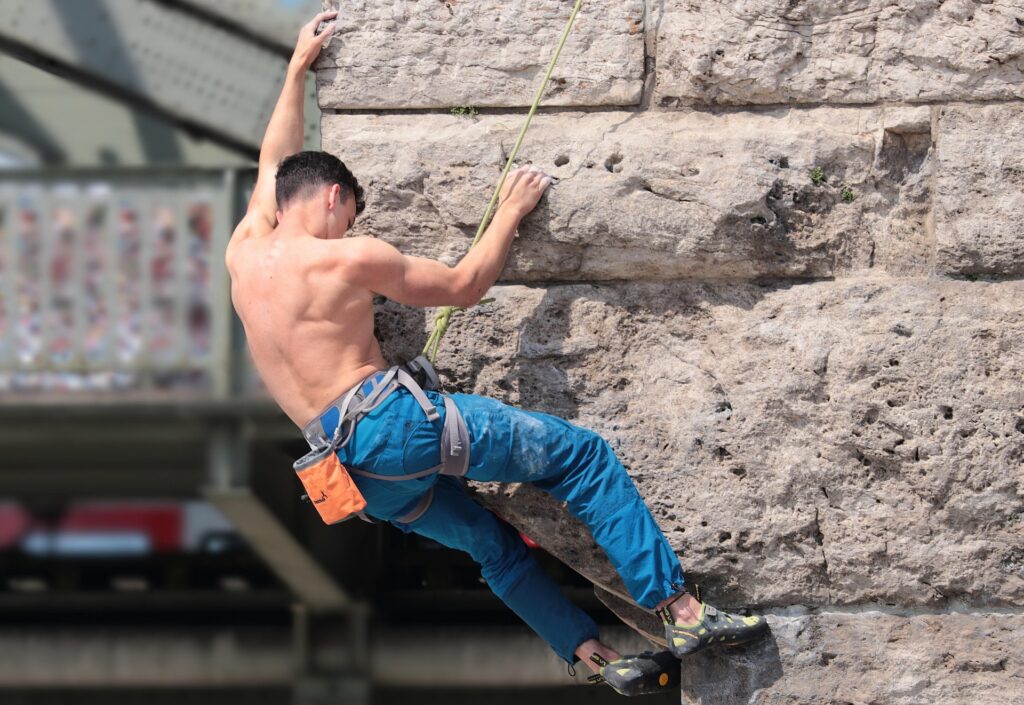
Safe transitions
Safe transitions using the CASE® Method as a guideline for the change process.
First rule
When I took climbing lessons, the first rule I was taught was to strictly adhere to safety regulations. Just as my Master and mentor in sailing, Michel Dejoie, used to slap the hands of anyone who gave less than three turns of the sheet on the winch, so the mountain guide who took me climbing was ready to use ‘force’ for violations of safety regulations.
Rightly so: the sea and the mountains are environments in which humans must first and foremost learn with humility that no one will take care of your safety if you don’t do it yourself. Otherwise, if you act with the arrogance of a ‘civilised’ person who believes in insurance or that mummy and daddy will always be there to protect you, you will rightly come to a bad end. These are strict rules, but there can be no compromise on this. Or you can get off my boat, no hard feelings, but quickly.
Second rule
The second rule was related to progression. It was still about safety, but also about effectively progressing towards the goal of reaching the top of the wall. The guide taught me that we have four points of support: two hands and two feet. Let’s leave aside for now the brave amputees, even those with multiple amputations, who can sometimes be admired practising sport in every possible way. Let us stick to us so-called ‘able-bodied’ people to whom this rule applies.
When moving, we do so by detaching one support and moving it with clear intention and purpose, while the other three remain firmly in place. Of course, sometimes the temptation to move two supports at a time is strong. Especially in seemingly easy passages. It is easy to get carried away and go from progression to risk-taking. But we must resist, at least until progressing becomes so natural that it happens with serpentine fluidity. At that point, the person and the wall become one, and it is difficult to separate the continuous movement into individual acts.
However, this fluidity is difficult to acquire during transitions, i.e. during the major changes that occur in the course of our lives. In fact, these changes do not generally have the continuity of a wall during a climb, but occur as singularities, each different from the other.
Safety in transitions
Transitions are moments, like climbing or sailing on the open sea, that must be approached with care and awareness. As well as with courage and confidence. Like other moments, these major changes and transformations, which are sometimes radical and disruptive, can cause harm, pain and suffering if not handled correctly. They may fail to achieve the desired transition to more desirable situations, even leading to deterioration. Alternatively, the expected results may not be achieved due to careless or uncertain management.
So how can we ensure ‘safe’ transitions? Continuing with the metaphor, we can say that to ensure safe transitions in our private or professional lives, we need to follow safety and progression rules similar to those mentioned above. The CASE® Method proposes an approach to transitions that facilitates a safe passage, maximising the possibility of achieving objectives.
Progression in 4 phases
The CASE® Method consists of four phases to ensure safe transitions:
- Cognitive
- Analytical
- Strategic
- Executive
These phases give the method its name. They are a bit like the four points of contact in climbing or similar safety rules in sailing, and must be followed to ensure safe and effective progress towards a transformative solution to the conflict.
The four phases of the CASE® Method must be addressed in sequence, somehow like the 4 points of support, starting with the Cognitive phase, which begins with the reconnaissance of the facts.
A solid foundation for secure transitions with the CASE® Method
It may seem trivial, but experience tells us that most transitions that fail or proceed in an undesirable manner do so because of shortcomings in the reckoning of the initial situation.
Most changes, especially the most radical ones, occur in the wake of turbulent emotional states, which undermine the ability to analyse the situation clearly. These are not necessarily negative states; they can also be creative excitement, that state in which a new, sometimes disruptive vision emerges from chaos.
In any case, for the new reality to establish itself in the best possible way, it is essential to maintain a clear view of the facts, of the reality of the context in which our actions take place. Therefore, the Cognitive phase is the one in which we focus on recognising the real facts, the authentic positions of all those involved in the transition process. It corresponds to keeping three supports firm and steady while moving one to the new position.
Only in this way is it possible to conduct a transition process that will ultimately deliver the expected results: the satisfaction of at least some of the Essential Needs of all parties involved and the absence of harm to anyone.
To learn more
This definition of “success” in the transition process is based on an in-depth theoretical development that I have carried out starting from the fundamentals of modern peace studies. If you are interested in learning more about the theoretical part, in order to fully understand the mechanisms on which the CASE® Method is based, you can read the book Sustainable Leadership, which is the fundamental text on the subject.
If, on the other hand, you want to move directly to a practical approach to applying it to your situation, contact me by email at federico@federicofioretto.biz for a free initial consultation. Together, we will see if and how I can help you make a successful transition and achieve the results you expect, even exceeding them.
Happy transitions!
